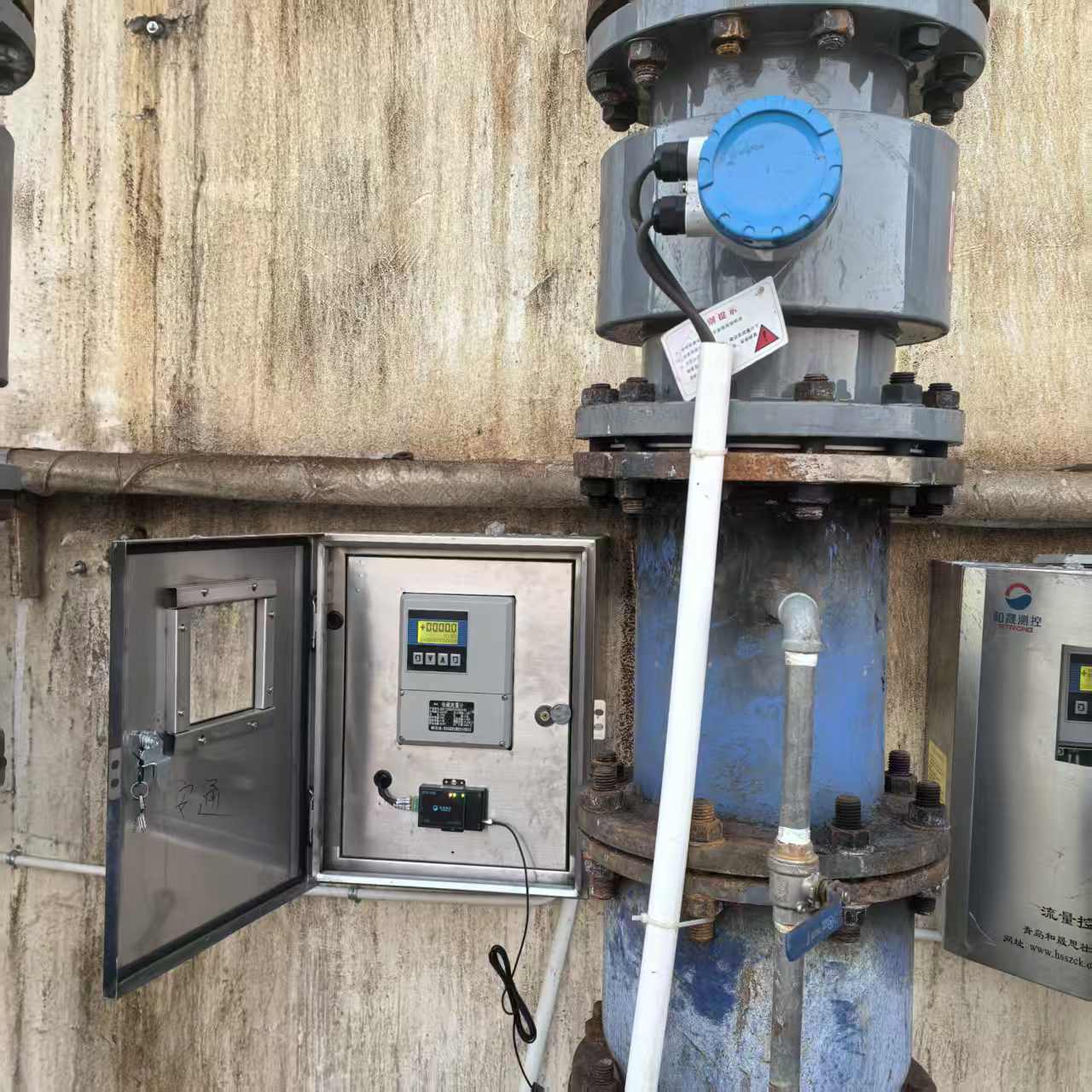
The working principle of an electromagnetic flowmeter is actually not complicated. Its core is based on Faraday"s law of electromagnetic induction. It is specifically used to measure the flow rate of conductive liquids in pipelines. When a conductive liquid flows through a measuring tube with a magnetic field, the liquid cuts the magnetic induction lines, which generates an induced voltage on the electrodes. The magnitude of this voltage is proportional to the flow velocity, and the meter then converts it into the flow rate through a formula.
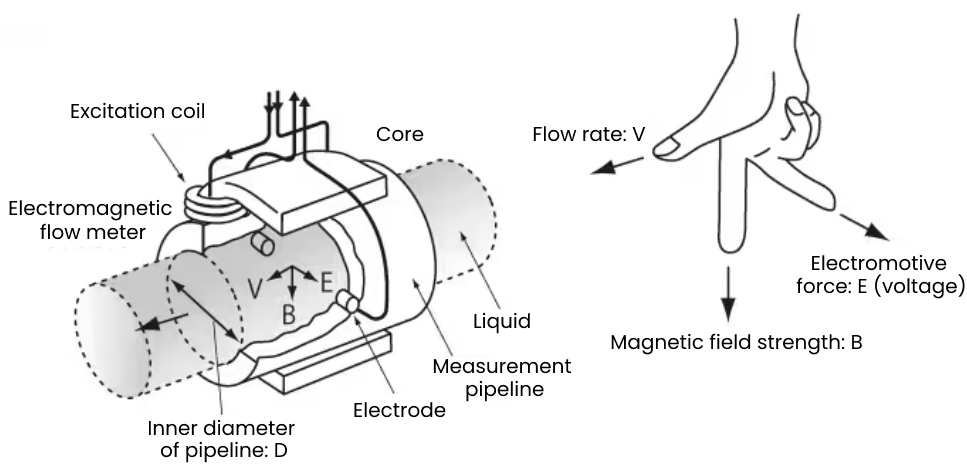
There are no moving parts in the entire process, so there is no clogging or jamming. The measurement is not affected by temperature, pressure, or density, which is why it is particularly commonly used in the water supply and drainage, sewage treatment, and chemical industries.
To help beginners understand more intuitively, we break it down into three steps in plain language:
1. Generating a magnetic field when energized: The coil inside the flowmeter is energized, forming a stable magnetic field in the measuring tube.
2. Liquid cutting magnetic field lines: When a conductive liquid flows through the pipeline, it is equivalent to "a wire cutting magnetic field lines".
3. Electrodes measuring voltage to calculate flow: The two electrodes on the pipe wall detect the induced electromotive force. The greater the voltage, the faster the flow rate, and the instrument automatically calculates the flow rate.

For beginners, after understanding the principles, the most crucial thing in product selection is to choose a product that is suitable for the working conditions, has stable measurement, and comes with guaranteed after-sales service.